
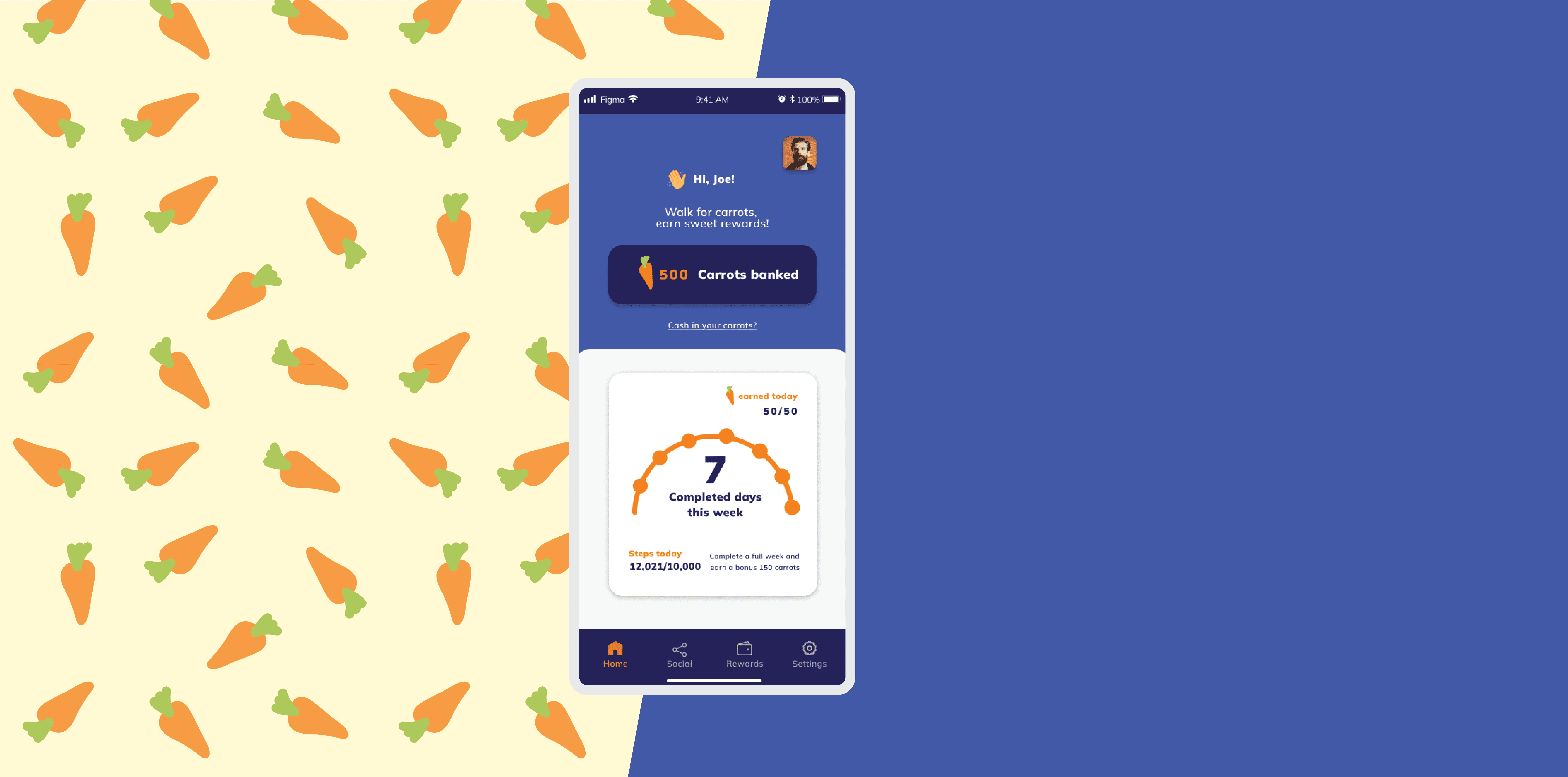
Carrot App - Designing a step-based rewards app
My Role
UX Research, UX Design, UI Design & Branding
Tools
Figma, Adobe Illustrator, Miro, Photoshop
Executive Summary
Carrot is a concept mobile application designed to incentivise physical activity by converting daily steps into redeemable vouchers.
The project explored how behavioural design, incentive mechanics, and commercial partnerships could combine to create a habit-forming wellness experience.
Why This Project?
I chose this as a side project because I was interested in the gap between awareness and action in health behaviour.
Most people know walking is good for them but most people struggle to stay consistent.
Fitness apps are widely available, yet long-term retention remains low. I wanted to explore whether tangible, real-world rewards could strengthen motivation and show why thoughtful UX design could turn daily steps into a repeatable habit loop.
I wanted to not only design screens but design new habits.
Research
Before designing anything, I needed to understand three things:
Why users disengage from step-tracking apps
What actually motivates consistent activity
How reward systems are structured in existing products
I spent three days across three different branches in the UK, travelling with engineers in their vans and visiting residents during active capital works and retrofit projects. I wanted to understand the experience from all sides.
Competitive Analysis
I reviewed several step-based and reward-driven apps to understand how they:
Visualised progress
Structured incentives
Communicated value
Handled redemption journeys
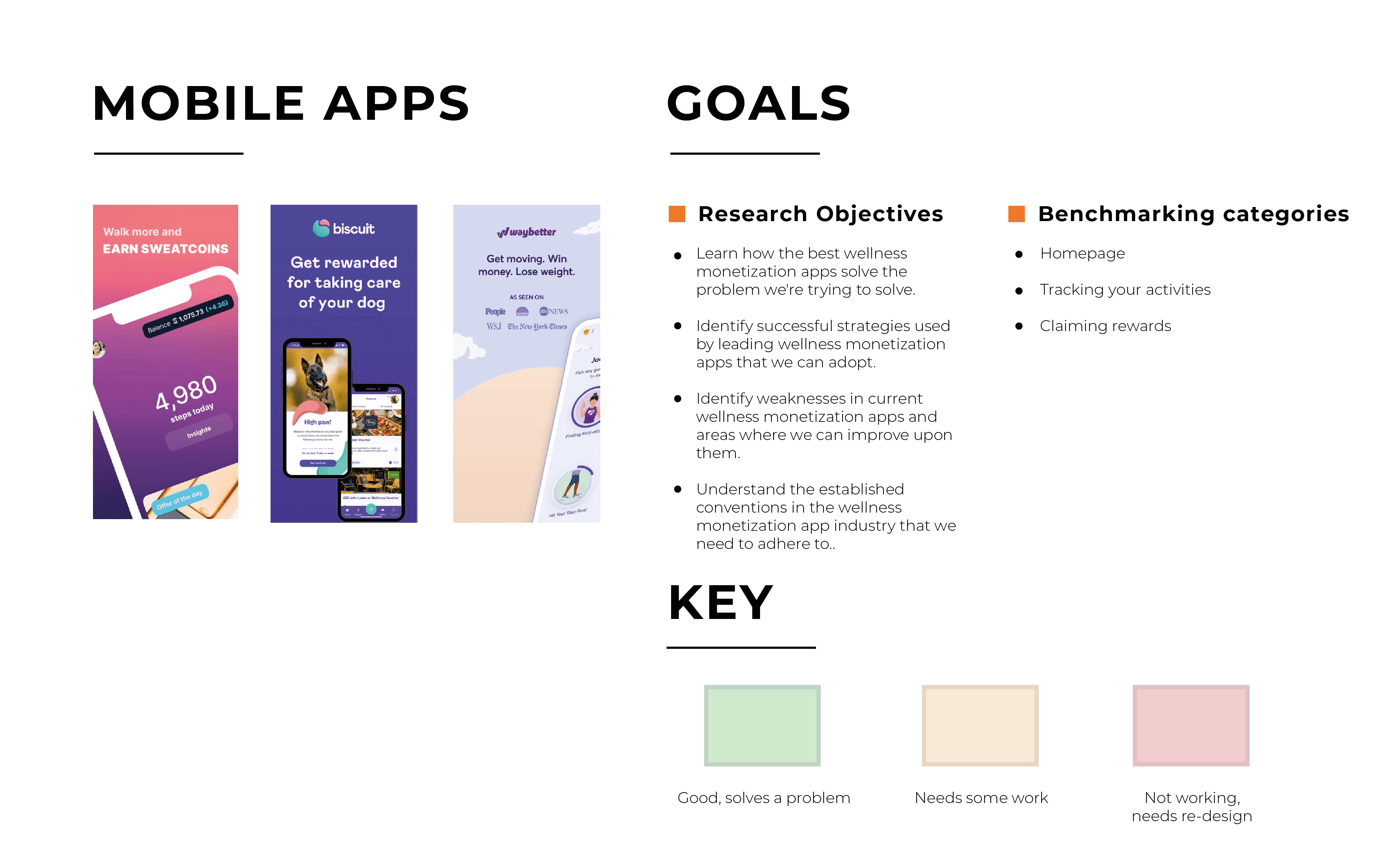
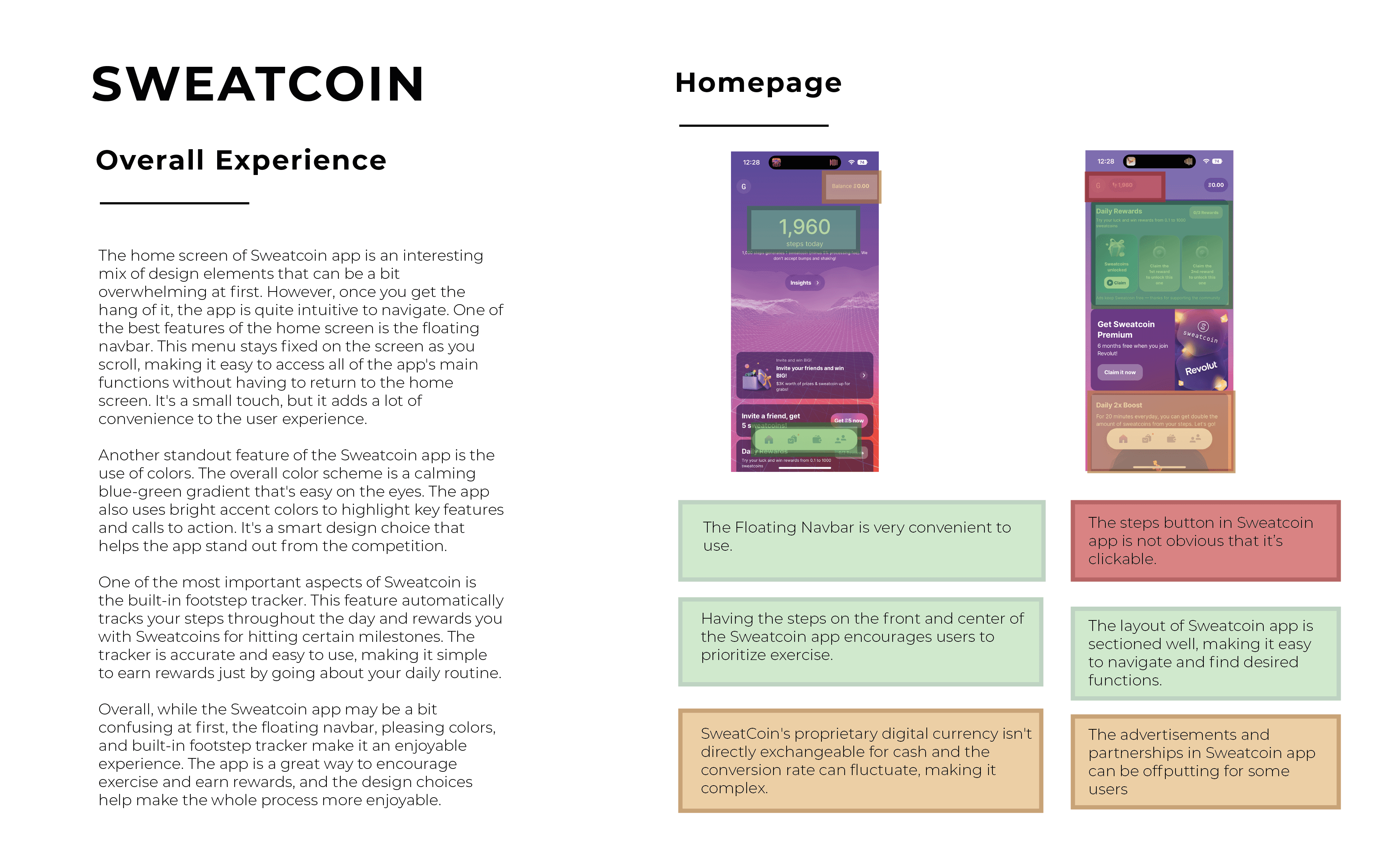
Many apps relied heavily on tracking data, but reward mechanics were either unclear, delayed, or overly complex. Motivation weakened when progress felt intangible or too far away.
Tracking was present but reinforcement was weak.
Online Survey
To validate assumptions, I ran an online survey with Facebook Communities exploring; attitudes toward physical activity, interest in incentive-based motivatio, preferred types of rewards and expected features
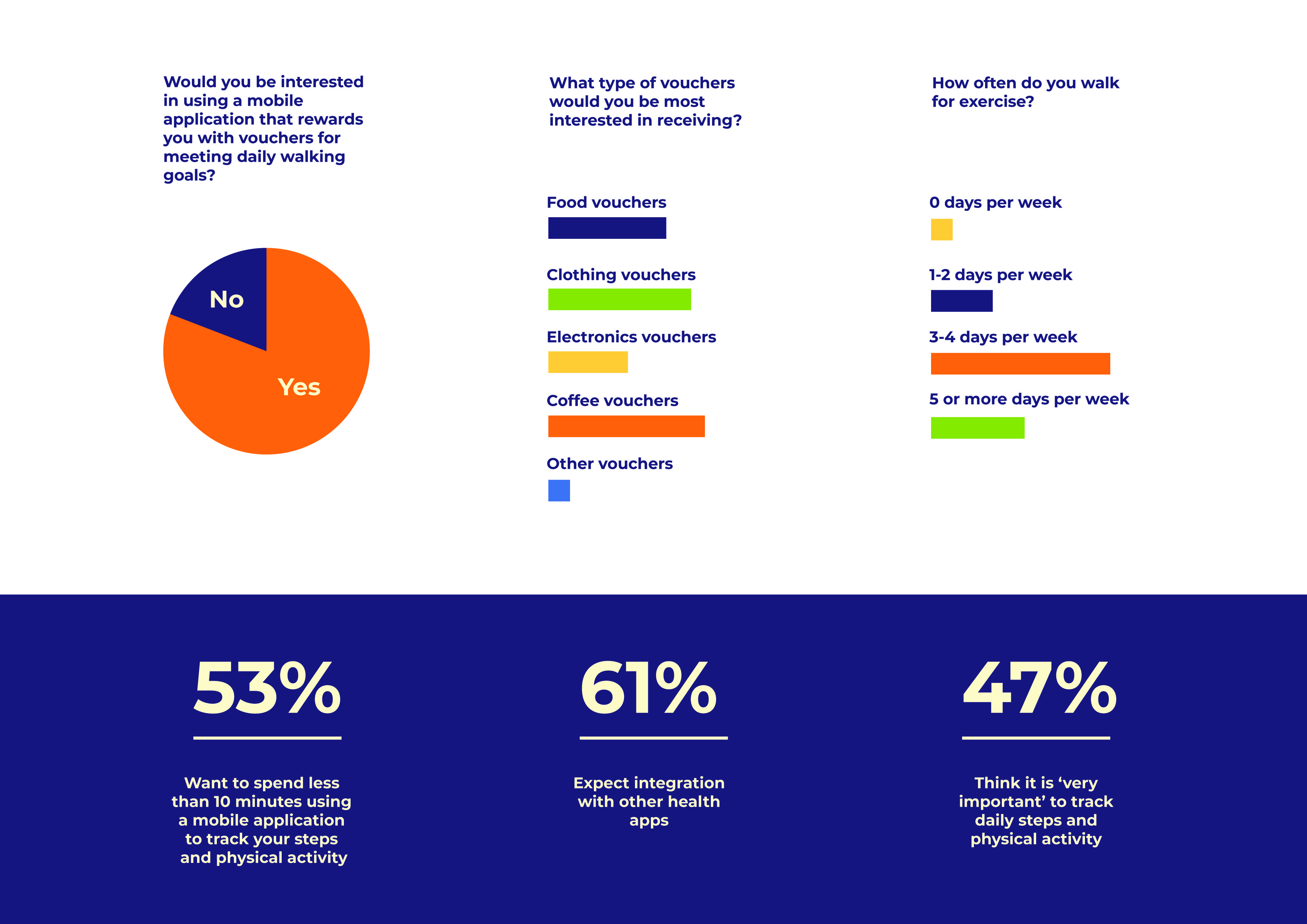
The results were telling:
53% want to spend less than 10 minutes using a mobile application to track activity
47% think it is 'very important' to track daily steps and physical activity
61% expected seamless health app integration
Usability Tests
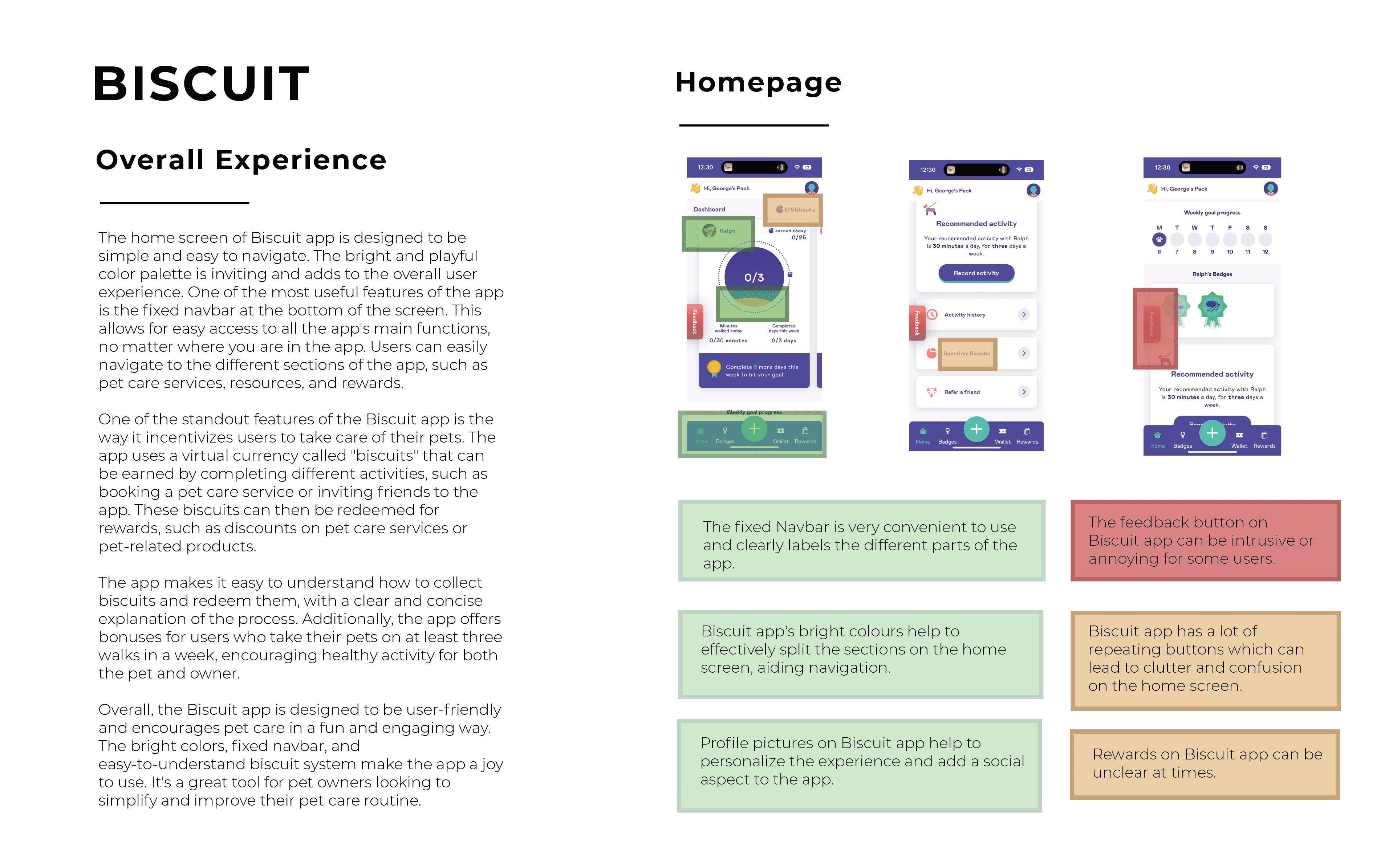
To understand how users currently interact with reward-led walking apps, I conducted usability testing on Biscuit, a similar app that incentivises dog walking.
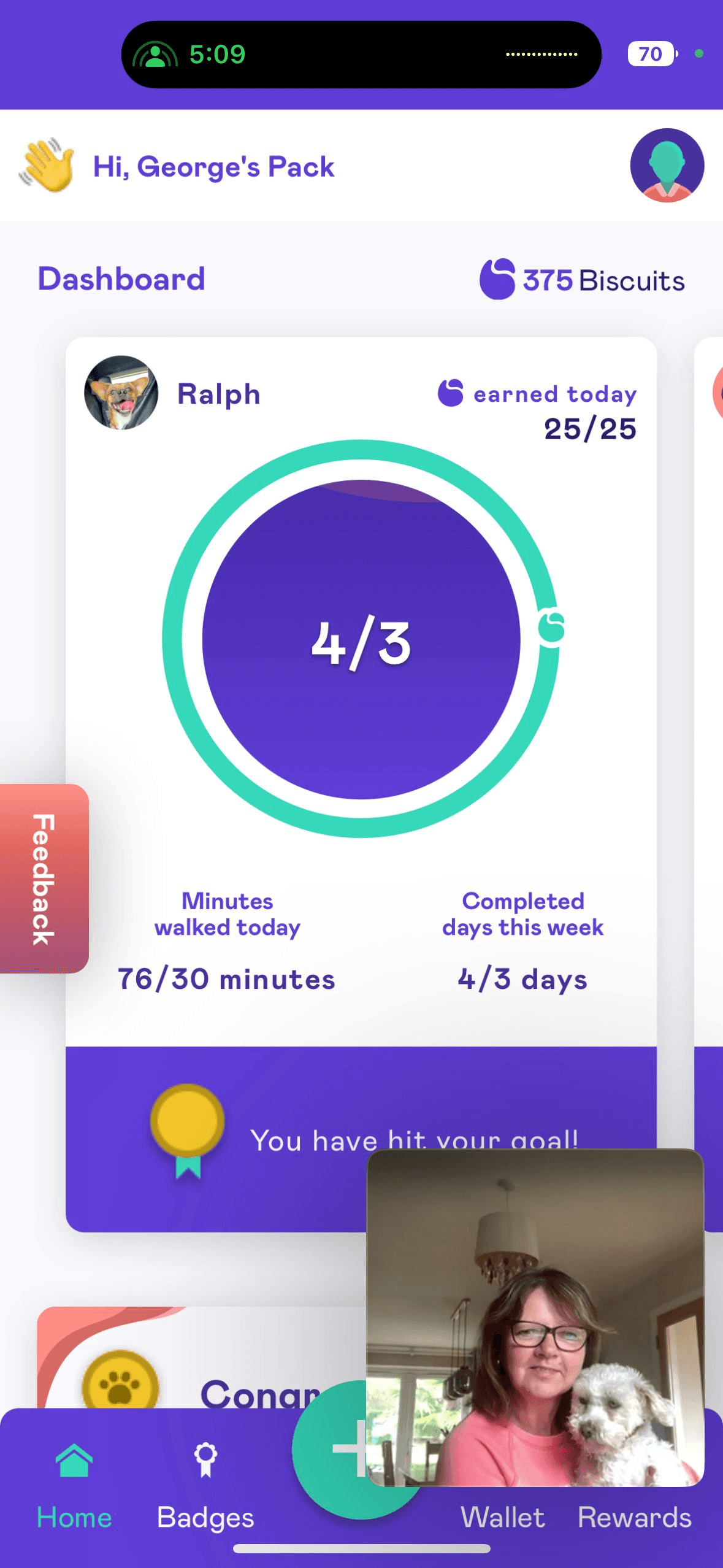
Several behavioural patterns emerged during testing. Users were noticeably more motivated when progress felt immediate and visible, while unclear reward thresholds created hesitation and uncertainty. Confusion increased when incentive mechanics weren’t transparent, and overloaded screens reduced confidence in how the system worked. Most significantly, engagement weakened when rewards felt distant or ambiguous.
The issue wasn’t that users didn’t value incentives, it was that clarity and attainability were essential to sustaining motivation.
Testing Biscuit reinforced three key principles that shaped Carrot’s design: progress must be instantly visible, reward mechanics must be simple and transparent, and milestones should feel achievable within short timeframes. These insights directly informed how Carrot structured its reward loops and prioritised clarity within the dashboard experience.
Research Findings
Collecting insights from competitor analysis, survey data, and usability testing revealed three consistent themes:
1. Visible Progress Drives Commitment
Users stay engaged when progress feels immediate and measurable.
2. Achievable Rewards Sustain Motivation
Smaller, attainable milestones maintain momentum better than distant high-value rewards.
3. Simplicity Reduces Drop-Off
Complex reward systems create friction and weaken trust.
The problem wasn’t lack of interest in walking.
It was lack of reinforcement.
Analysis
Affinity Mapping
Following research and usability testing, I gathered insights from Sweatcoin, Biscuit, and Waybetter alongside survey data and observed behaviours.
Rather than reviewing each input in isolation, I mapped all qualitative feedback, friction points, motivations, and behavioural patterns into a single affinity diagram. This allowed me to identify recurring themes across competitor analysis, survey responses, and real user interaction.
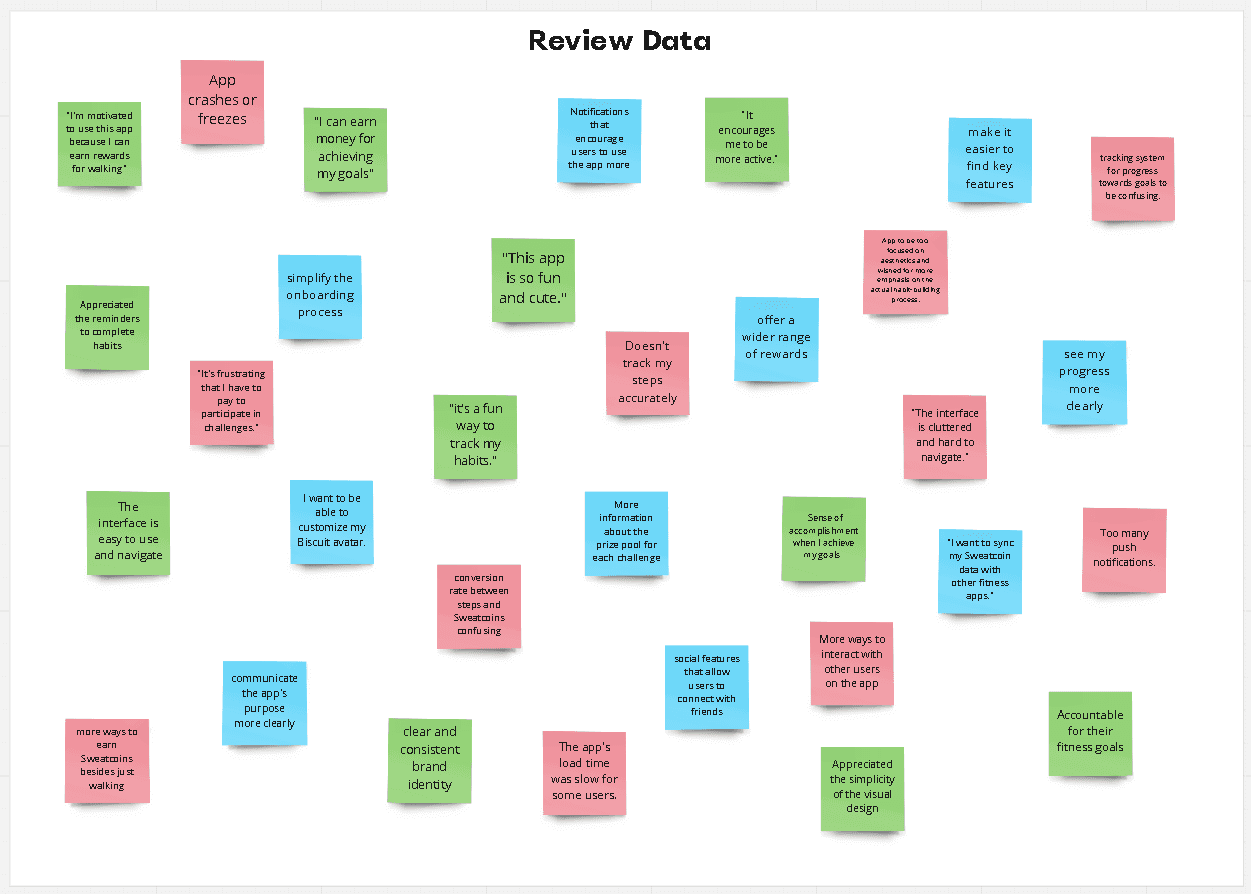
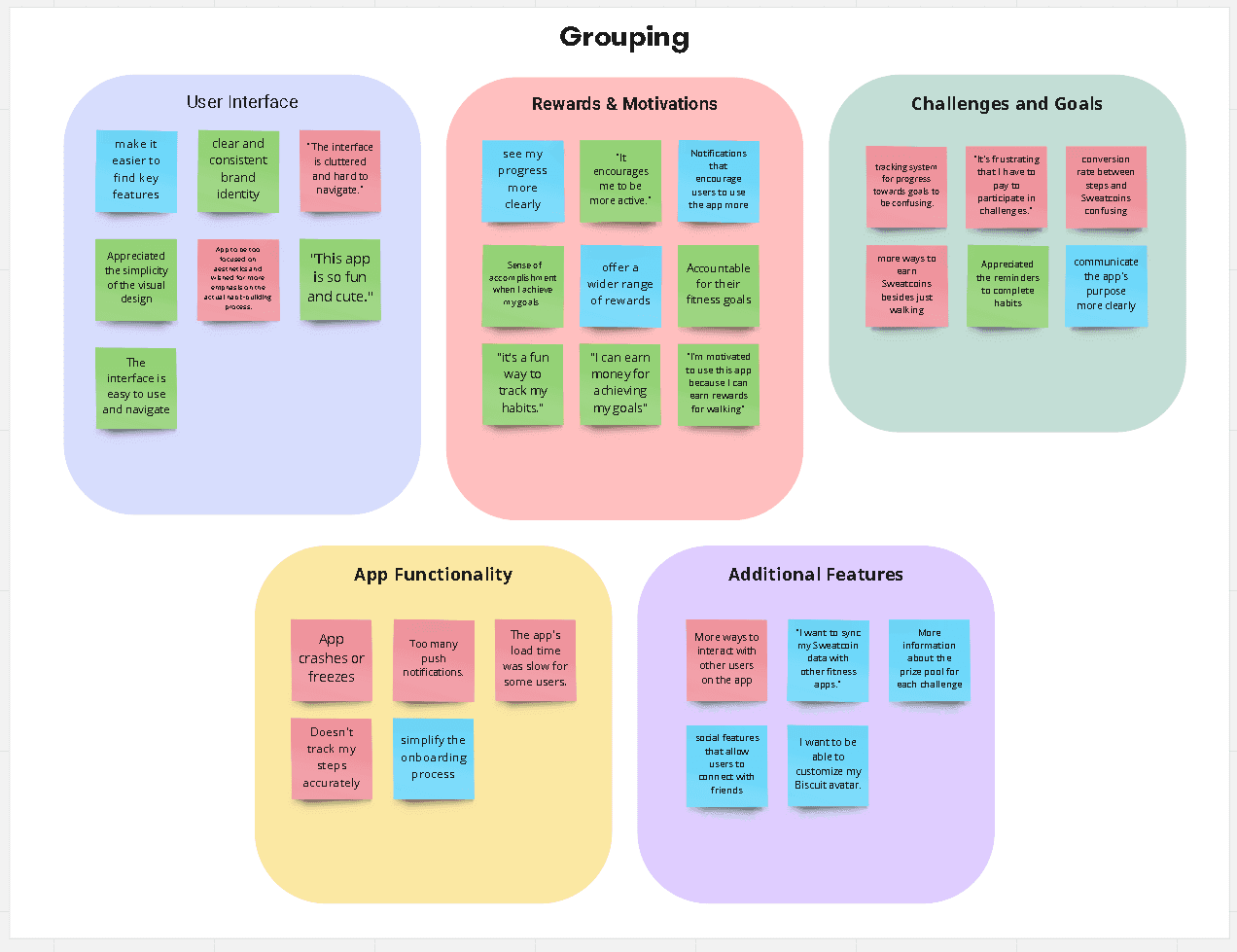
Mapping the data visually exposed patterns that weren’t obvious in isolation. For example, reward frustration was often tied to clarity rather than value. Motivation dips frequently correlated with distant milestones rather than lack of interest.
Customer Journey Map
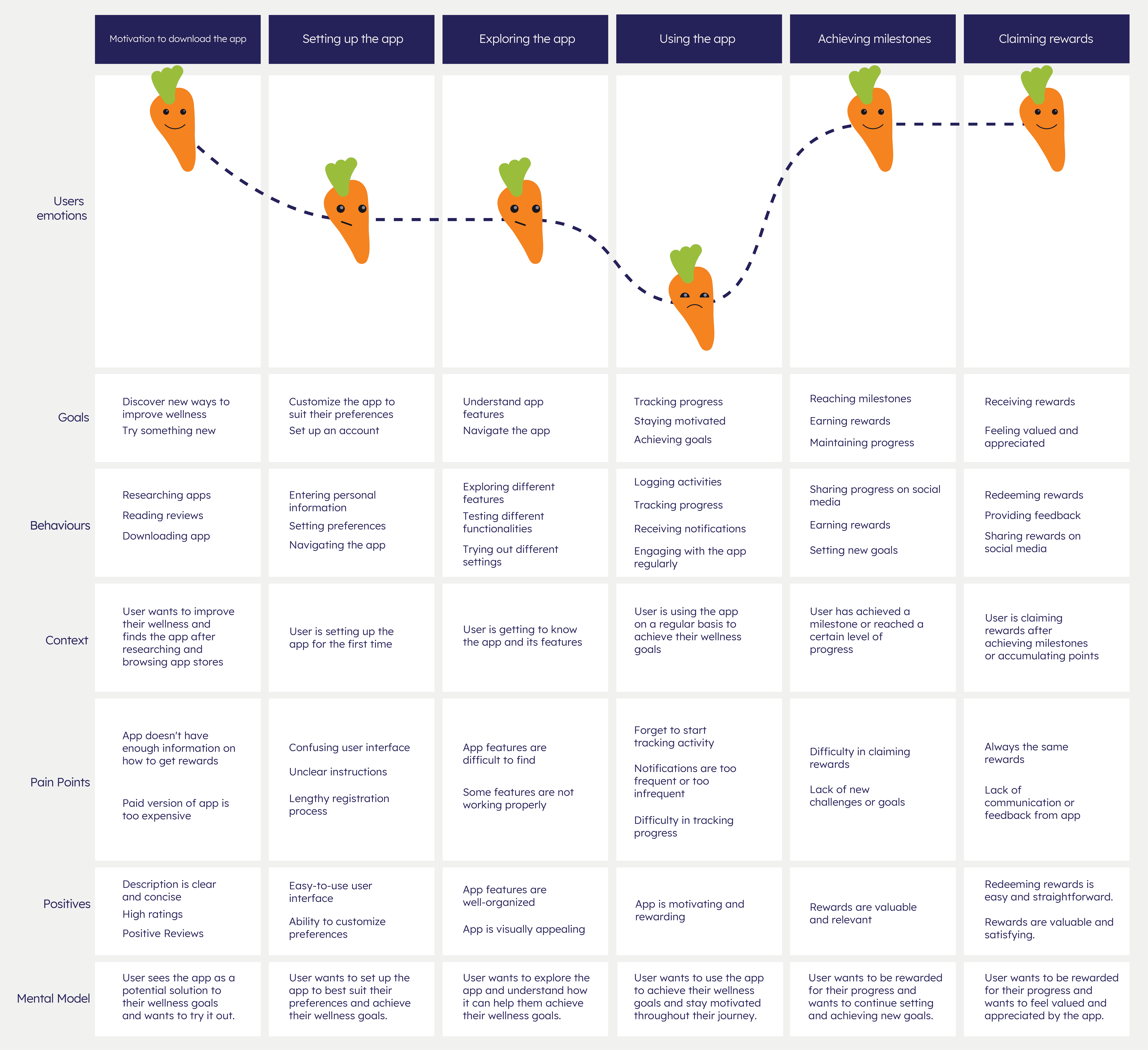
After analysing the feedback from the affinity diagram, I then plotted this on a customer journey map. This customer journey map outlines the emotional states, goals, behaviours, context, pain points, positives, and mental models of users as they navigate a new mobile wellness application. It includes six stages, starting with the motivation to download the app and ending with claiming rewards.
The map is designed to help the team understand the user experience and identify pain points that can be addressed to improve user satisfaction.
It provides a comprehensive overview of the user journey, from initial excitement to eventual satisfaction, and highlights areas where the app can be optimized for a seamless user experience.
Designing
Customer Journey Map
With the behavioural themes defined, the next step was to translate insight into structure.
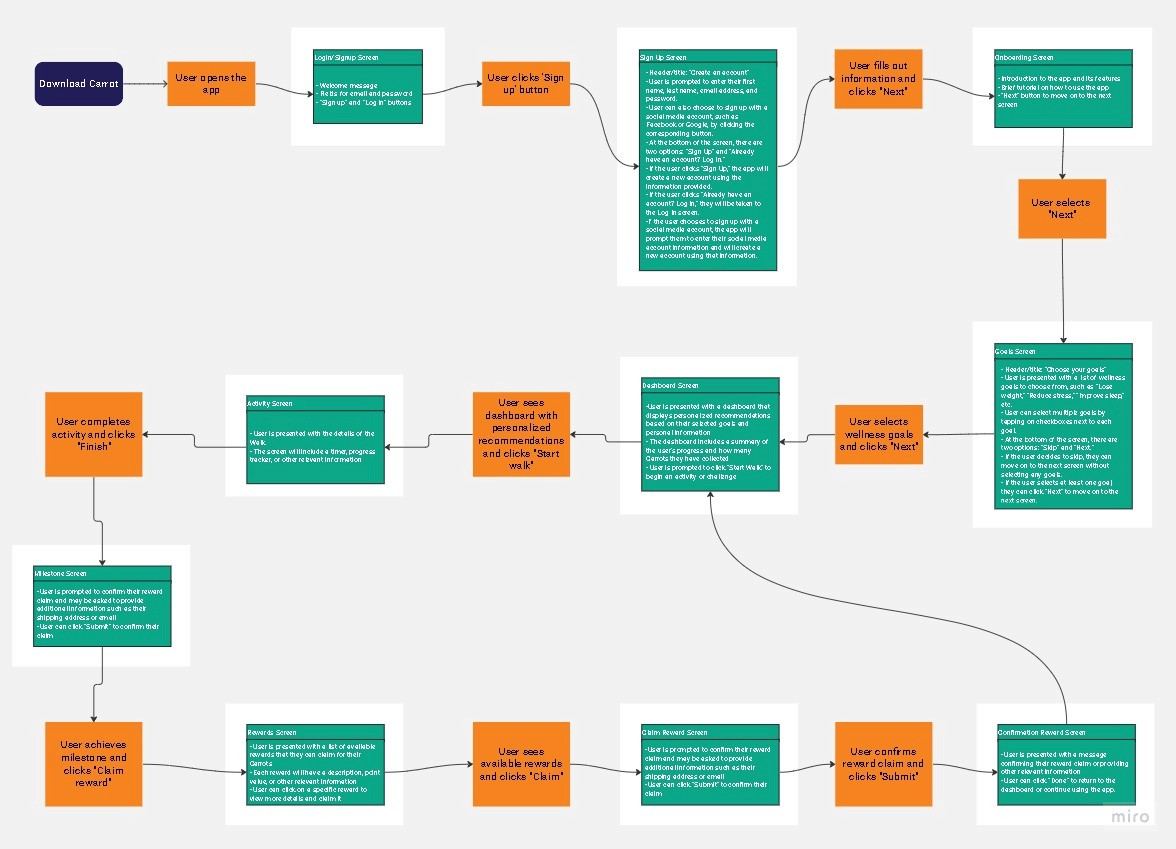
I created a high level user flow diagram that shows the steps a user takes to complete an activity, achieve a milestone, and claim a reward within the app.
The onboarding process begins with personalization and goal selection, leading to the dashboard where users can start activities. When a milestone is achieved, the user can claim a reward, view available rewards, confirm their claim, and see a confirmation message.
This flow aims to simplify the user experience and make it easy for users to track their wellness progress and earn rewards.
UI Style Guide
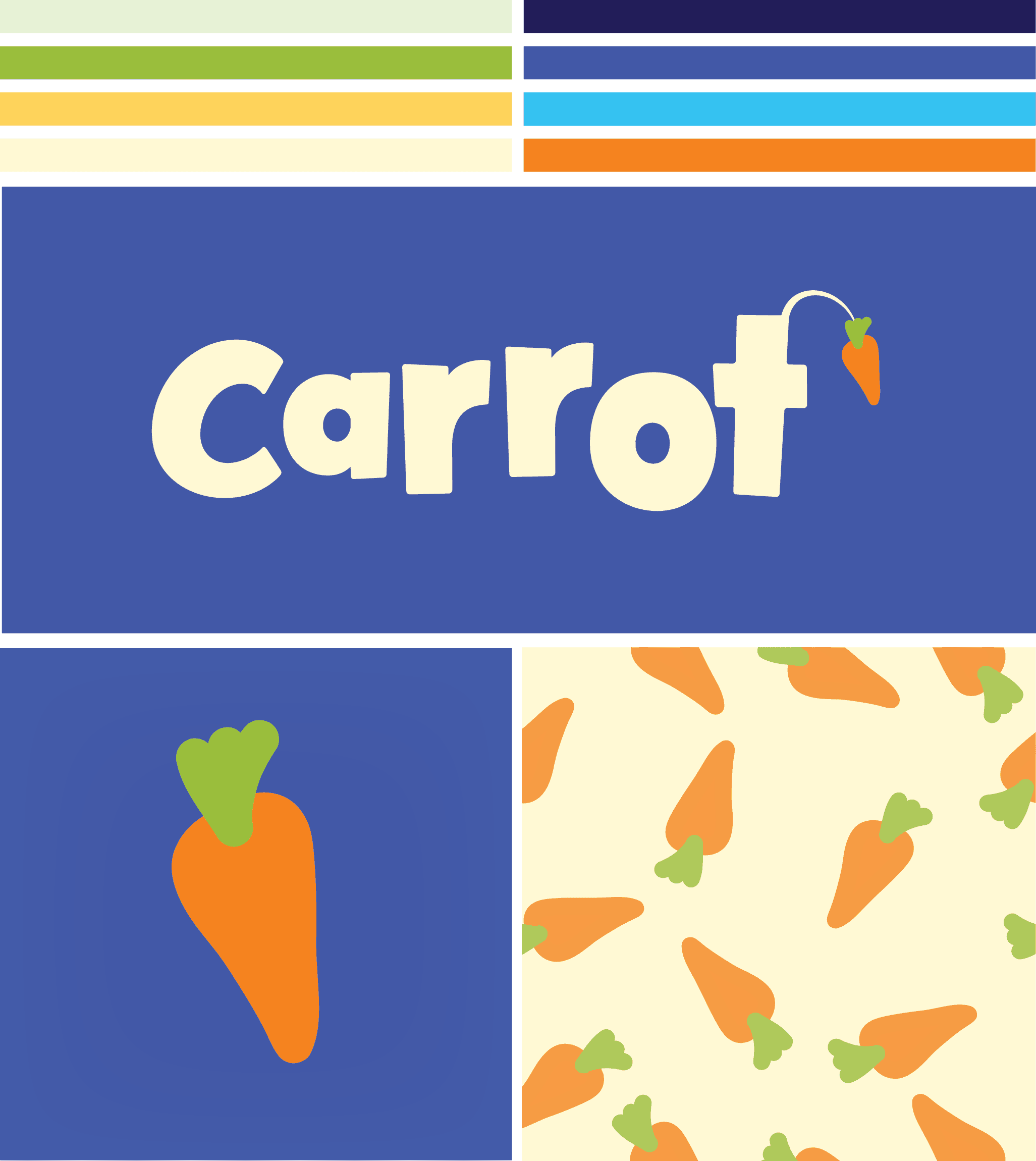
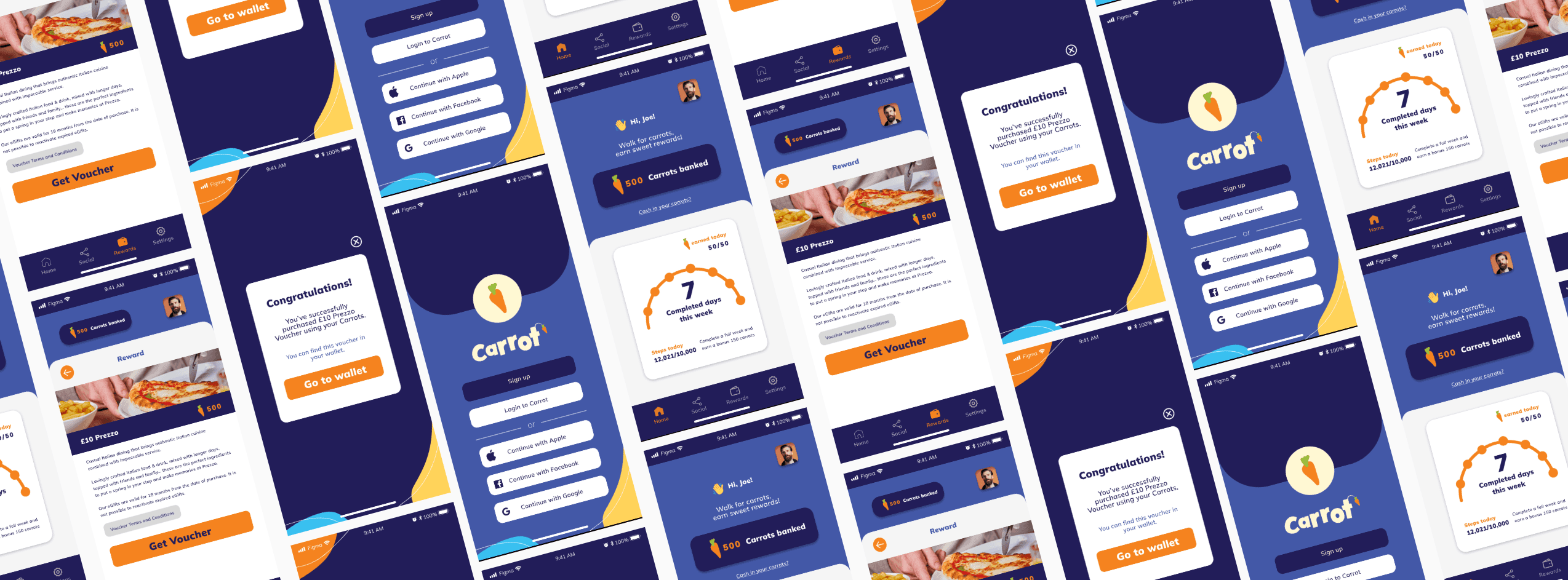
The Carrot identity was designed around a simple behavioural metaphor:
The carrot on a stick.
The concept reflects the core mechanic of the product and users are continually motivated by a visible reward just ahead of them. Just as a carrot dangles in front of someone to encourage forward movement, the app positions rewards as something to chase through daily steps.
The logo symbolises this idea of pursuit and reinforcement. It isn’t just decorative, it represents momentum.
Colour was used deliberately to reinforce motivation and trust.
A deep blue tone form the foundation of the interface, creating a sense of stability, credibility, and calm. Since the product involves reward accumulation and voucher redemption, trust is essential.
Orange drawn from the carrot acts as the primary accent colour.
The interface was designed around three core visual principles:
Clarity Over Decoration
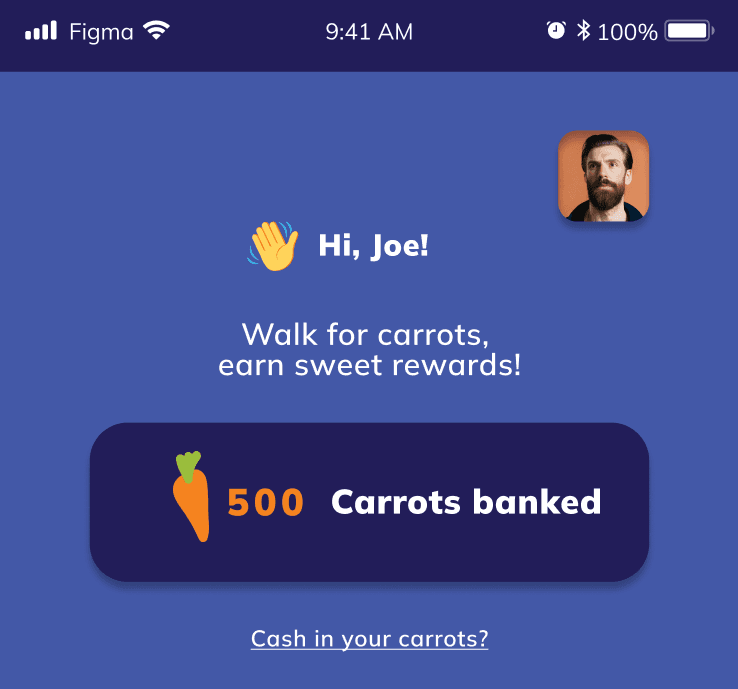
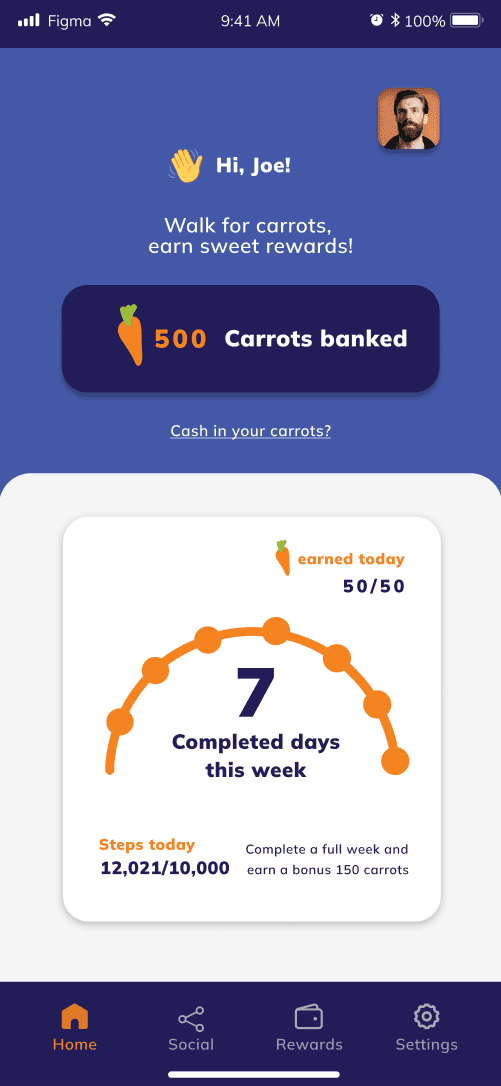
Progress, carrot balance, and reward distance are always prioritised.
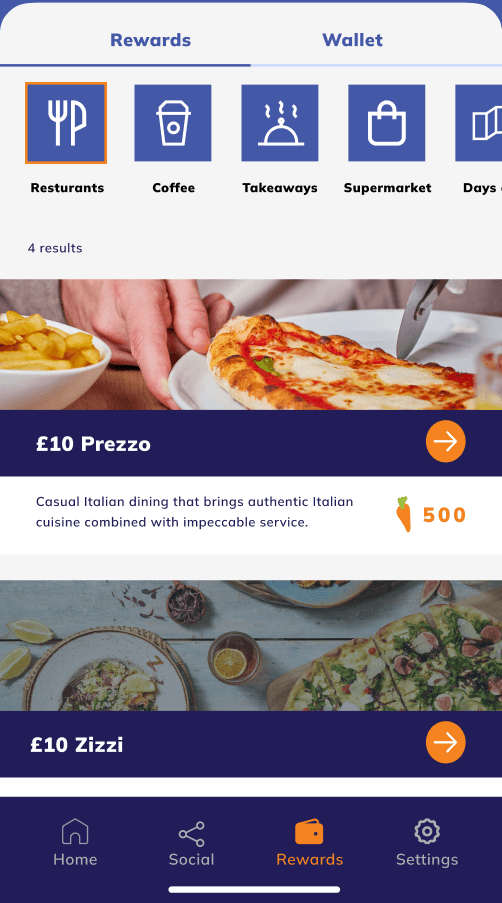
Reward Visibility
Milestones and incentives are highlighted to sustain anticipation.
Encouraging, Not Overwhelming
The design avoids excessive gamification visuals, keeping the experience motivating but mature.
The Results
Reflecting on the journey
Designing Carrot strengthened my understanding of how behavioural psychology, product structure, and visual clarity must work together to drive sustained engagement.
The project moved beyond interface design and into system thinking. Motivation, reinforcement, and clarity are designed intentionally.
Personalisation Increases Commitment
Giving users control over their goals changes the relationship they have with the product.
When someone sets their own target, it feels like their progress, not something the app is imposing on them.
Personalised recommendations and tailored rewards make the experience feel relevant, which increases the likelihood of repeat engagement.
Reward Design Is About Timing, Not Just Value
Designing rewards isn’t just about what you give, it’s about when and how you give it.
Smaller, achievable milestones create early momentum. If rewards feel too far away, motivation drops. If they’re too easy, they lose value.
Spacing and visibility mattered more than I initially expected. Clarity around what you’re earning and how close you are to it is what keeps people moving.
Daily Re-Engagement
For Carrot to work, it has to become part of a routine.
That meant stripping back complexity and making the dashboard instantly understandable. If someone can open the app and immediately know where they stand, they’re far more likely to come back tomorrow.
Want to find out more?
I would love to know what you think or if you have any questions about this case study or any other case study on my site. Contact me on Linkedin, email me at georgegarrott.design@gmail.com or send me a message below: